Is Astrology Really Science?
A universal debate
Within the scientific community, it has been debated whether astronomy and astrology revolve around the same scientific evidence and if they are on the same level scientifically. This debate doesn’t occur in just the scientific community, similar questions arise within the general public such as “Aren’t astronomy and astrology the same thing?” “Oh you’re an astronomer? Can you tell me my horoscope?” and many other similar questions. At first glimpse, astrology may seem scientific. It uses scientific knowledge about positions of the stars and the sun, constellations, heavenly bodies, and scientific sounding tools. Many people use this “science” to generate expectations about what’s the future events will look like as well as personalities of certain individuals; most of which is backed up with evidence which consists of reviews of people who feel that Astrology and the science has worked for them. However, Astrology is merely a pleaser science. 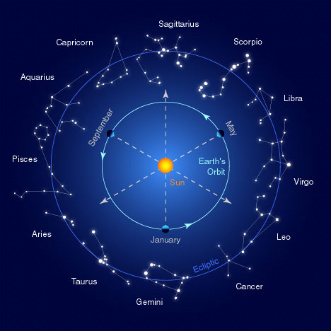 | 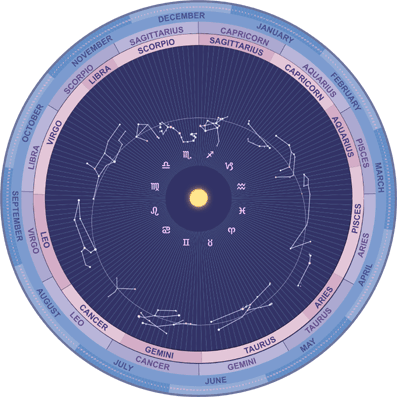 One of the main focuses of Astrology is the natural world. Astrology’s basic belief is that heavenly figures or objects – the sun, moon, planets, and constellations – have a direct influence on major events. Astrology uses a specific set of rules and ideas about positions of “heavenly objects” to generate a reason for events on Earth and why humans act the way they do. For example; some types of astrology predict that a person born immediately after the spring equinox is very likely to become an entrepreneur. Astrology also deals with the position of the sun in correlation to specific constellations. Astrologers believe that the constellation the sun is in front of during a specific month determines what personality and traits a person born in that month will have. This ideas is called your zodiac. |
Though many believe astrology works for them, well known scientists fail to accept the idea of Astrology becoming a basic science. One of their reasons is that some expectations are so general that any outcome could be interpreted as they would like, thus making astrology not testable. There are a few cases however where Astrology has generated testable expectations and the results were examined with careful study; however, the evidence did not support the ideas. This is common in science; although, Astrology cannot modify their ideas and have new evidence to support it. Evidence that supports astronomy is very limited and very subjective; therefore, Astrology has not changed its ideas in response to this false evidence making the new results and theories untestable and therefore false.
In most sciences, an important part of scientific growth is the sharing of new finding with other fellow scientists. This allows them to critically analyze your data and conduct your tests to decide whether or not your data is accurate. This idea is not a practiced principle in astrology and that makes scientists less willing to accept them. An astrologer can go an entire career and not present findings to a scientific body, and often what they do publish wind up on peer-review or public reviewed websites where those who can’t test their theories blindly review their article. This idea makes the theories of Astrology seem even more false making scientists even more unwilling to accept the science. | 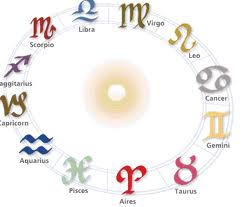 |
In all, astrology is a science that many find helpful to them and many enjoy following, but Astrology is not a science that will be accepted in the professional community any time soon. To some they may see it as a science, but Astrology, based on data, will remain a social science without a substantial amount of testable evidence.
